
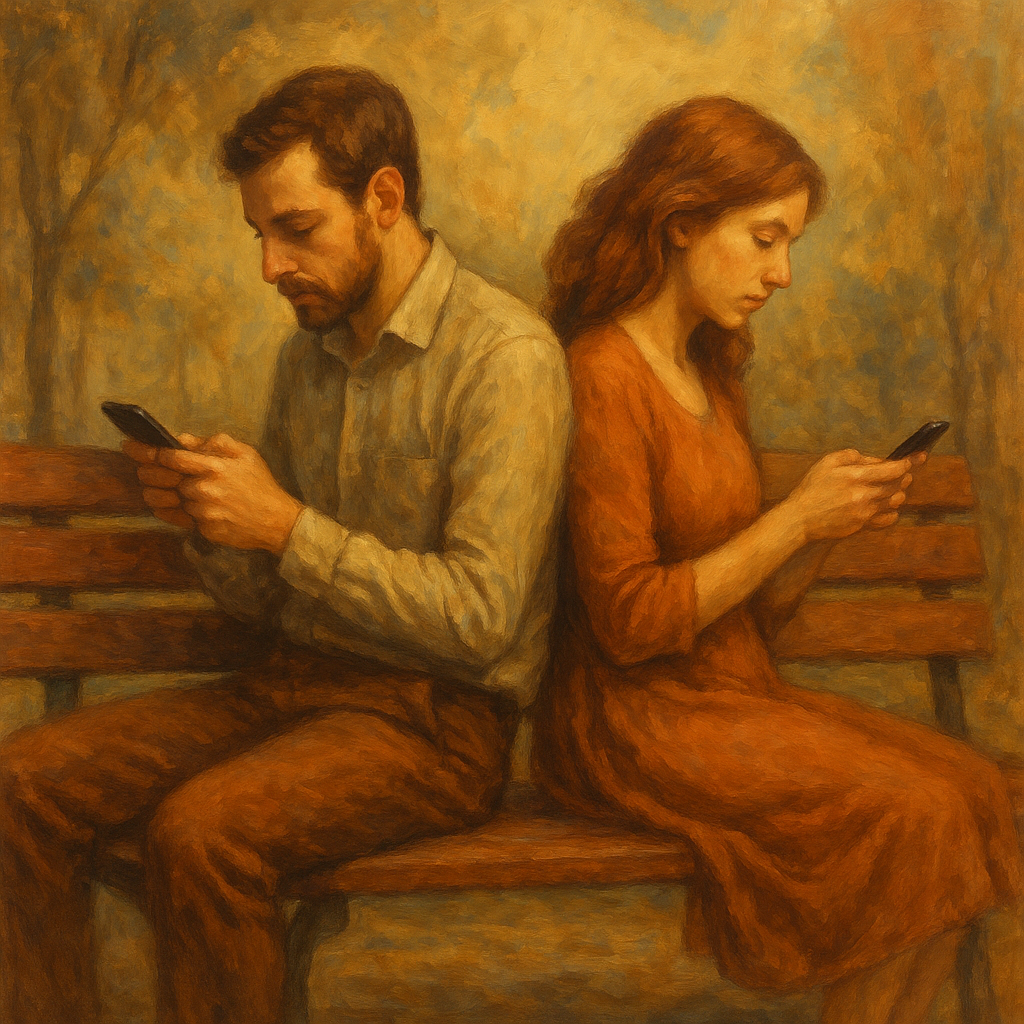
“All together” is written separately.
“Separately” is written all together.
The philosophical twist is irresistible: togetherness is expressed through distance, and separation requires unity.
It is a confession: language was never built for logic—it was built for theatre.
Language is not a precision instrument. It is not a Swiss watch ticking reliably through meaning.
It is a surrealist theatre, staged in grammar and costume changes, built on idioms, accidents, and centuries of beautifully uncorrected mistakes.
Do not think for a moment that similar twists are limited to a specific language: no, all languages are complicit co-conspirators.
Take Italian, for instance, a language as musical as it is mischievous.
Try “fare il pacco”. You would think it means “to prepare a package.”
In reality, it means “to stand someone up.”
Because in Italian, betrayal apparently involves imaginary logistics.
Now turn to German, where clarity supposedly reigns.
Germans will glue nouns together into Frankenwords of epic proportions.
Words like Lebensabschnittsgefährte (“life-phase companion”) exist because “boyfriend” was too emotionally honest.
And bureaucrats in Berlin still sleep soundly after inventing the 85-letter Rinderkennzeichnungsundrindfleischetikettierungsüberwachungsaufgabenübertragungsgesetz.
Yes, that is one word. For a law. About beef labelling.
They do not even regret it—which is the truly alarming part.
Because why use a sentence when one catastrophic word will do?
Then there is French, which opts for elegance laced with sadism: instead of chaos by excess, it chooses chaos by silence.
With noble vowels, silent consonants, and rules that only apply on alternating Tuesdays.
A final consonant might be pronounced—if Venus is in retrograde and the next word begins with a vowel.
Pronunciations change if the moon is full.
It is a language that asks you to read with your eyes, pronounce with your instincts, and conjugate with the help of divine intervention.
All these seemingly absurdities are not bugs in the system.
They are the system.
We like to believe languages are tools—meant to make sense.
But anyone who has wrestled with more than one language knows that logic was never invited to the party. What showed up instead?
Irony, contradiction, flair, and a gentle touch of chaos.
Because in the end, language is not there to behave.
It is there to express, confuse, reveal, hide, seduce, and survive.
It is not a clock.
It is a Dali painting, bending time and reason, dripping with intention, and still—somehow—right on time.
And despite it all, we understand one another.
Or we pretend to.
Which, in any language, is usually enough.
All together—separately.